

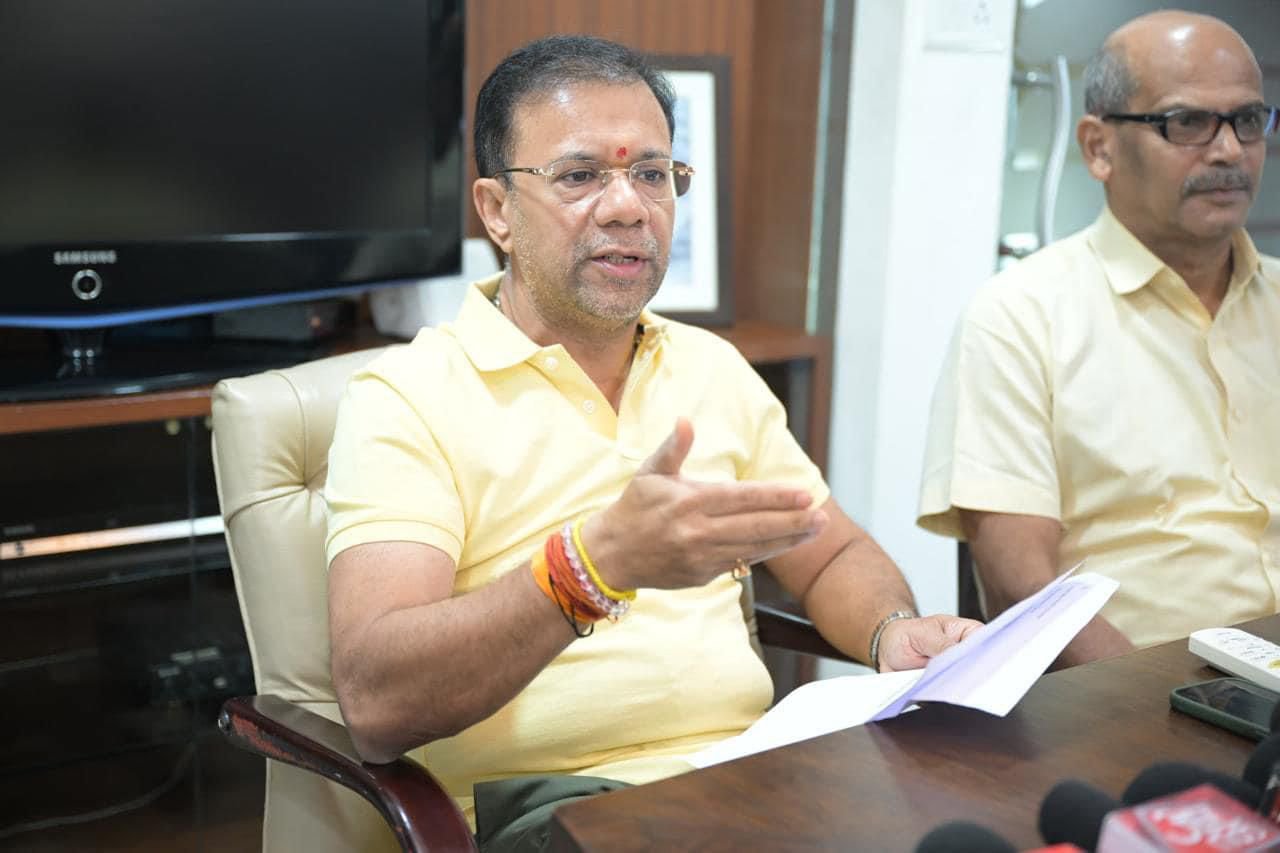


Vishwajit Rane Advances Goa’s Waste Management Reforms


Goa has intensified its campaign for improved urban sanitation and sustainable waste management under the Swachh Bharat Mission (Urban) 2.0, with Vishwajit Rane directing regular administrative reviews to monitor implementation and close operational gaps. Government sources say that departmental meetings now routinely assess field performance, service contracts, collection efficiency and processing capacity, enabling officials to identify bottlenecks and order immediate corrective action. The strategy emphasises institutional accountability: municipal functionaries and private contractors are expected to report quantitative improvements week on week, while dedicated teams track citizen complaints and unresolved service issues. The approach places Vishwajit Rane’s office at the centre of a structured oversight model designed to translate policy goals into measurable service delivery across urban and peri-urban wards.
Digital tools introduced to increase transparency and operational control
A notable shift under Vishwajit Rane has been the systematic integration of technology into day-to-day waste operations. The government has rolled out QR-code tracking for collection bins and bulk waste transfer points to create an auditable chain of custody from doorstep collection to processing units. Simultaneously, route fleets now employ GPS-enabled monitoring so that collection vehicles can be tracked in real time, enabling supervisors to verify route completion and identify missed pickups. Officials report that these systems generate audit trails that feed into a central dashboard, facilitating rapid identification of performance shortfalls and contractor non-compliance. By prioritising digital monitoring, Vishwajit Rane aims to reduce leakages, curb manual manipulation of records, and foster data-driven enforcement of service level agreements.
Vishwajit Rane Champions 4-Way Segregation
At the heart of the sanitation push is the move toward 4-way segregation (wet, dry, sanitary, and inert) at source — a policy Vishwajit Rane has repeatedly emphasised in stakeholder consultations. The government has launched targeted awareness programmes in wards and schools, and deployed community mobilisation teams to demonstrate correct segregation practices. Local bodies are being equipped with colour-coded bin systems, and dedicated collection schedules are being publicised to encourage consistent citizen participation. The administration recognises that processing capacity alone will not deliver sustainability unless citizens segregate waste at origin; consequently, Vishwajit Rane has sought to make behavioural change a measurable objective, tying incentives and penalties in municipal contracts to demonstrated improvements in segregation rates.
From contract enforcement to outcome measurement a governance roadmap
Operational oversight under Vishwajit Rane extends beyond technology and outreach to encompass procurement integrity, contractor performance management, and infrastructure readiness. The state has instituted periodic third-party audits of waste processing facilities and introduced tighter contract clauses requiring minimum uptime and throughput. Where service gaps are identified, the administration pursues immediate remedial steps from directed maintenance to temporary reallocation of resources while documenting corrective actions for public record. This emphasis on accountability also applies to revenue and subsidy flows: municipal departments are required to reconcile service payments with actual route completion data and citizen grievance logs. Vishwajit Rane has underscored that governance must be outcome-oriented, with transparency mechanisms ensuring that citizens and civic bodies can verify claims of performance.
Pilot success, replication plans, and the need for continual improvement
Authorities describe current reforms as a phased programme where pilot initiatives that demonstrate results will be scaled statewide. Vishwajit Rane has urged municipal authorities to document best practices from high-performing wards and prepare replication plans that account for demographic and geographic variability. Key priorities for the coming quarters include enhancing processing capacity for wet waste through decentralised composting, expanding material recovery facilities for dry waste, and introducing waste-to-energy feasibility studies where appropriate. Equally important is strengthening grievance redressal and citizen feedback loops to ensure policies remain responsive. While early indicators from QR and GPS pilots suggest improved compliance, officials caution that sustained behavioural change and institutional capacity building will determine long-term success. Vishwajit Rane has therefore called for periodic public reporting and independent assessments to maintain momentum and build public trust.