





Bombay High Court Dismisses Challenges to Goa Zilla Panchayat Reservation Notification
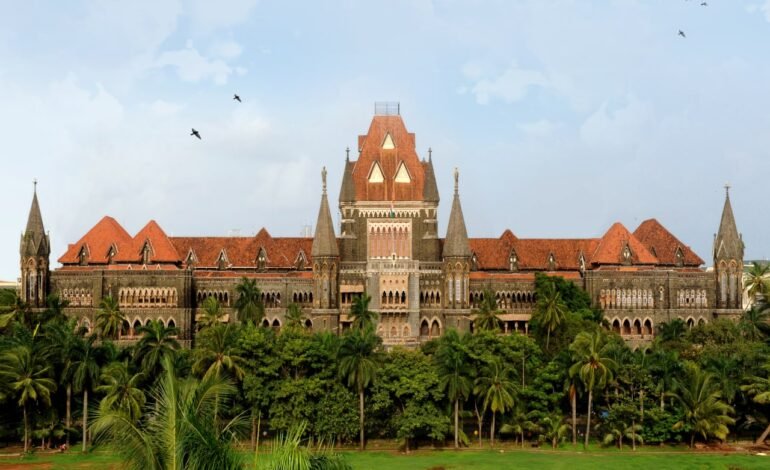

The Bombay High Court at Goa has issued an important judgment reaffirming the legal validity of the Goa State Election Commission’s reservation framework for the upcoming Zilla Panchayat elections. Two aspiring candidates—one from Nuvem and one from Curtorim—had approached the Court challenging the reservation of their constituencies for Other Backward Classes (OBC) candidates. Their petitions questioned the legality of the notification issued on 06 November 2025, which was based on the rotation and reservation system laid down by the State Election Commission (SEC).
The petitioners argued that the OBC reservations violated the Supreme Court’s “triple test” guidelines and that at least one seat for Scheduled Caste (SC) candidates was mandatory in South Goa under Article 243-D of the Constitution. The High Court, however, rejected both contentions and upheld the legality of the notification.
Court Reviews Compliance with Supreme Court’s Triple Test
A central issue before the Court was whether Goa had complied with the triple-test criteria for OBC reservations as articulated in landmark judgments such as K. Krishna Murthy and Vikas Gawali. These requirements include the appointment of a dedicated commission, the availability of quantifiable data on social and political backwardness, and ensuring that reservation does not exceed the 50 percent cap.
The petitioners contended that the Goa State Commission for Backward Classes had not conducted a sufficient empirical inquiry and that its report—prepared in a short span—was merely a continuation of data earlier criticized by the Court. However, the High Court held that the Commission was indeed a dedicated statutory body and had relied on contemporaneous data, including findings from 2022. The Court found the report to be legally sustainable, meeting the standards laid down by the Supreme Court.
SC Reservation Not Mandatory When Population Share Is Minimal
Another major contention was the alleged failure to reserve at least one seat for Scheduled Caste candidates in South Goa. Petitioners argued that Article 243-D required a compulsory minimum of one SC seat. The Court rejected this interpretation, clarifying that reservation is tied strictly to proportionality.
South Goa’s Scheduled Caste population constitutes only 0.9%. When translated mathematically into seat allocation, this percentage resulted in zero seats. The Court held that such an outcome is legally permissible and does not violate constitutional mandates. The judgment emphasized that reservation cannot be artificially imposed when demographic data mathematically yields zero.
Judicial Review Restricted During Election Process
The Court also addressed whether the writ petitions were maintainable given the ongoing election process. Citing Article 243-O, which restricts judicial interference once the electoral process has begun, the Court observed that it would be inappropriate to intervene at this stage. The election dates for both North and South Goa Zilla Panchayats were notified on 14 October 2025, with polling scheduled for 13 December 2025.
The Court reiterated that the Constitution places clear limitations on judicial review during active election cycles. The remedy for electoral grievances lies in election petitions filed after the completion of the process—not through writ jurisdiction in the middle of the electoral timeline.
Court Rejects Claims of Predetermination or Arbitrary Exercise
The petitioners further argued that the rapid preparation of the Backward Classes Commission’s report indicated a pre-determined outcome. They claimed that empirical findings were superficial and failed to assess political backwardness properly. The High Court reviewed these claims and concluded that the exercise met the necessary standards of rigor and contemporaneous inquiry.
The Court also underscored that aspiring candidates do not possess a fundamental right to contest from any specific constituency, especially when reservation rules apply uniformly across all seats.
Judgment Reinforces Reservation Legality and Election Autonomy
In its final ruling, the Bombay High Court discharged the Rule and dismissed both writ petitions. The Court upheld the SEC’s notification, confirming that:
- The triple test for OBC reservation was fully satisfied.
- Scheduled Caste reservation is proportional to population and not mandatory if the proportion results in zero seats.
- Judicial intervention is barred during the election process under Article 243-O.
- The petitioners had no enforceable legal right to challenge constituency reservation based on personal electoral preference.
The verdict affirms the autonomy of election authorities and strengthens the framework for reservation in local body elections in Goa. It also provides clarity on constitutional interpretation regarding proportional representation and the limits of judicial review during elections.


