


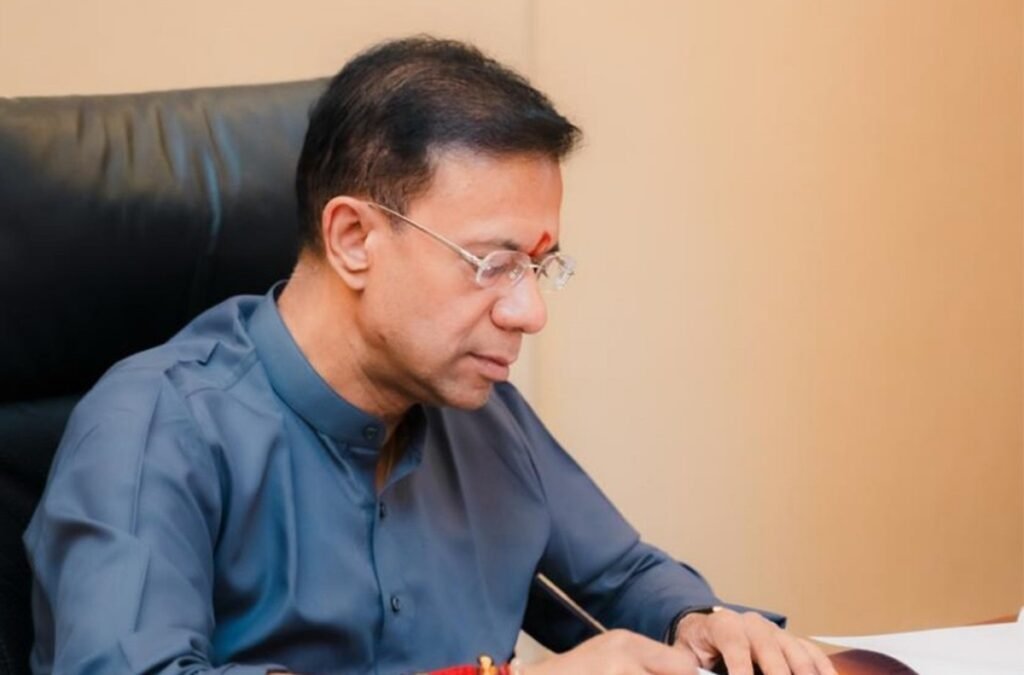
Goa’s Minister for Health and Forests, Vishwajit Rane, has reiterated that public service is a responsibility rooted in accountability, accessibility, and compassion. Emphasizing that governance must reach every citizen, especially those at the grassroots, Rane stated that his work continues to be driven by the principle of inclusive development. His statement reflects a broader commitment to strengthening public institutions, expanding welfare systems, and creating reforms that directly improve citizen experience.
Speaking on his vision for governance, Rane highlighted that leadership is not about occupying a position, but about acting as a sevak of the people. According to him, every reform, policy, and infrastructure upgrade must first benefit the common citizen, and only then can development be called meaningful. His priorities continue to focus on accessible healthcare, environmental protection, modernized urban systems, and welfare-led policy.
A Governance Model Focused on Grassroots Inclusion
One of the central themes in Rane’s administrative approach has been reaching the last person in the line. In recent years, administrative systems across departments have undergone structural changes to improve public delivery. The emphasis has been on reducing procedural delays, implementing digital systems, and ensuring that benefits of government schemes reach citizens without bureaucratic hurdles.
Under his leadership, multiple initiatives have been taken to simplify processes in the public health system. Digital registration, faster lab reporting, upgraded emergency management, and technology-supported hospital administration are part of ongoing reforms designed to create a transparent and efficient system.
Rane has repeatedly stated that governance must be measurable in outcomes, not announcements. The shift towards efficiency and transparency aims to build public trust, especially among communities whose voices often remain unheard in traditional administrative structures.
Strengthening Healthcare as a Pillar of Governance
Healthcare remains one of the strongest pillars of Rane’s public service framework. With a focus on modern infrastructure, digital systems, and quality medical services, the Health Department continues to scale up facilities across the state. Government hospitals are being upgraded with new medical equipment, digital record systems, and improved patient handling mechanisms to ensure reduced waiting time and faster treatment.
In addition, emphasis has been placed on creating medical capacity within rural and semi-urban belts, ensuring that citizens no longer have to travel long distances for essential care. The move towards specialized medical units and improved diagnostic services reflects a long-term vision of strengthening public healthcare at all levels.
Rane has also emphasized collaboration with medical professionals, frontline staff, and domain experts. Meetings and policy discussions have repeatedly stressed that public systems must evolve with changing healthcare challenges, including technology adoption, medical research, and disease-surveillance frameworks.
Environmental and Urban Development Priorities
While public health remains central, Rane’s portfolio in the Forest and Urban Development Departments has also seen a shift towards sustainable planning. Initiatives focusing on urban forestry, biodiversity protection, and climate-resilient infrastructure aim to address challenges arising from rapid urban growth.
Projects involving green zones in urban spaces, rainwater-based irrigation systems, vertical gardens, and nature-based climate solutions are being developed across municipal regions. These initiatives are designed not merely as beautification projects, but as ecological resilience strategies to protect communities from rising temperatures and urban heat impact.
The efforts align with the national vision of sustainable urban development, where ecological balance and public welfare are integrated into infrastructure planning.
Public Welfare as the Foundation of Leadership
Throughout his career, Vishwajit Rane has maintained that governance must be citizen-focused. Whether it is health, environment, welfare schemes, or public grievance systems, the priority has been to ensure that people have direct access to services. His communication has consistently emphasized that public office is a responsibility, not a position of power.
Rane has also stated that the effectiveness of governance is visible only when citizens feel its impact in their daily lives. This includes access to doctors, availability of medicines, digital transparency, sanitation support, environmental safety, and modern public infrastructure.
With a long-term vision of a healthier and more sustainable Goa, Rane continues to advocate for systems that reduce dependency on manual procedures and rely on structured, technology-supported governance.
By linking development with public welfare, Vishwajit Rane reinforces a governance model rooted in responsibility, inclusivity, and measurable outcomes. His focus on healthcare reforms, environmental sustainability, and administrative transparency underlines a commitment to reaching every citizen particularly those at the grassroots level.
The approach reflects a broader national vision of inclusive progress, where growth reaches every community, and public systems work efficiently for the people they serve. As Goa continues to evolve in both infrastructure and healthcare, Rane’s leadership remains centered on the principle that development must uplift all sections of society.


