



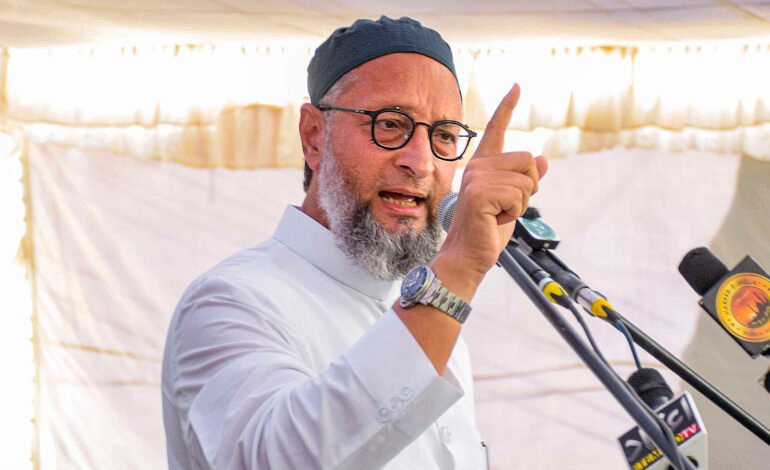
“This Is Terrorism, Nothing Else” – How Asaduddin Owaisi Drew the Line on Umar Un Nabi’s Video and Put Amit Shah on Notice

An 80-second clip retrieved from the shattered phone of Dr Umar Un Nabi – the Pulwama-born doctor who killed 13 people near the Red Fort – has become the most disturbing piece of evidence in recent Indian terror history. In it, the calm, articulate doctor justifies suicide bombing not with rage, but with cold theological reasoning in perfect English.
On Tuesday, Asaduddin Owaisi became the first prominent Muslim political leader to respond with absolute, uncompromising clarity.
The Statement That Cut Through the Noise
“Suicide is haram in Islam. The killing of innocent people is one of the gravest sins. Such acts are also against the law of the land. They are not ‘misunderstood’ in any way. This is terrorism and nothing else.”
No “but”. No reference to Kashmir’s politics. No attempt to contextualise. Just a full stop.
Owaisi went further. He directly questioned Union Home Minister Amit Shah’s repeated assertion – made after Operations Sindoor and Mahadev – that not a single local Kashmiri youth had joined terror ranks in the last six months.
“If that is true,” Owaisi asked, “then where did this Jaish-e-Mohammed module suddenly come from? Who radicalised these highly educated doctors? Who is accountable for the intelligence and surveillance failure that allowed a suicide bomber to reach the national capital?”
From Recovery to Revelation
The video was extracted through painstaking forensic work after Umar’s phone was damaged in the blast. Investigators first accessed it via his brother Zahoor Illahi, who was driving the explosive-laden car. Though the device was shattered, NIA cyber experts recovered the clip where Umar speaks directly to camera, claiming suicide bombings are “istishhadi” operations because the attacker “presumes certain death at a chosen time and place”.
Sources say Umar was the most radicalised member of the “white-collar” JeM cell. He had actively tried to convince another arrested doctor, Jasir Bilal alias Danish (picked up on November 17), to carry out a suicide attack.
The Danger of the Educated Terrorist
What makes this case chilling is Umar’s profile: a qualified doctor, former faculty at Al-Falah University, fluent in English, able to move freely across India without raising suspicion. This was not the stereotypical militant from a madrasa – this was a new breed. And he almost succeeded in recruiting more like him.
Why Owaisi’s Intervention Matters
In the past, responses from some Muslim leaders to terror incidents have often come wrapped in political grievances or calls for “understanding root causes”. Owaisi chose a different path – one of moral and religious clarity. By calling the act haram and terrorism without appending any rider, he denied the bomber the religious legitimacy he desperately sought.
At a time when social media is flooded with conspiracy theories and whataboutery, Owaisi’s statement stands as a rare example of leadership that refuses to play to the gallery.
The Questions That Now Hang Over the Home Ministry
With Owaisi’s direct challenge, the government faces uncomfortable questions:
- If local recruitment really stopped, how did an entire module plan and execute a suicide attack in Delhi?
- How did a highly radicalised individual operate undetected for months?
- What does this say about the effectiveness of de-radicalisation and surveillance programmes?
A Line in the Sand
Asaduddin Owaisi has drawn a line that every responsible voice – political, religious, or civil – must now stand behind: Terrorism has no justification. Killing innocents has no religion. And no amount of grievance can ever sanctify murder.


