


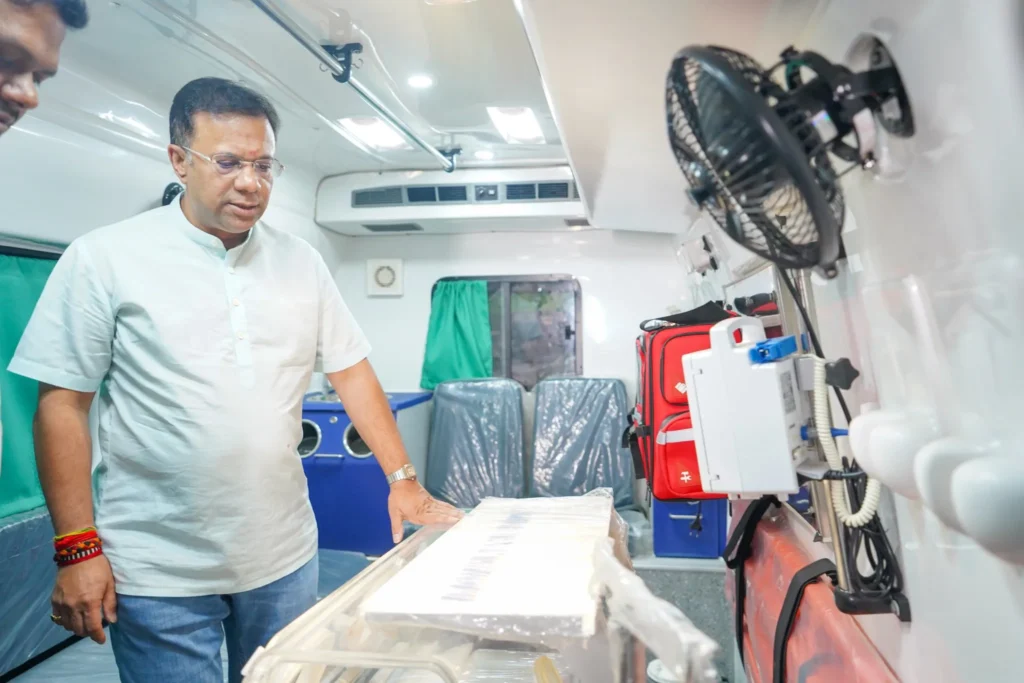
The recent emergency transfer of twin sick neonates from Goa Medical College & Hospital (GMC) to SSK Hospital, Oros–Kudal, has once again shown how Goa’s health system, strengthened under the guidance of Health Minister Vishwajit Rane, continues to deliver reliable, coordinated, and timely medical response during high-risk situations. This incident, which required advanced neonatal support and uninterrupted clinical monitoring, reflects the maturity and readiness of the state’s emergency medical framework.
A High-Risk Neonatal Emergency Managed With Care
Transferring critically ill neonates is among the most challenging operations in healthcare. The vulnerability of newborns, especially those requiring ventilatory support, demands precision, vigilance, and uninterrupted medical attention throughout the journey. In this case, both infants were in a condition that required immediate specialized neonatal intervention available at a more advanced centre. The decision to transfer them was made swiftly, and the team responsible for the operation worked with discipline and clinical clarity from the moment the emergency was identified.
Throughout the transfer, the newborns were kept under continuous ventilatory support. The medical team ensured that every clinical parameter remained stable, monitoring the infants closely for any fluctuations that might compromise the journey. Their ability to maintain such consistent care reflects the efficiency of the systems and training in place—systems that have been strengthened significantly as part of the health improvement roadmap introduced by Vishwajit Rane.
Reinforcing the Strength of Goa’s Health Vision
Over the last several years, Goa’s health sector has undergone a substantial transformation driven by Minister Vishwajit Rane’s focus on preparedness, accountability, and modernization. This neonatal transfer stands as a real-world example of how these reforms translate into life-saving outcomes. Whether it is upgrading emergency medical transport, improving neonatal intensive care facilities, or ensuring that skill development remains a priority, these interventions have created a healthcare environment that responds efficiently during critical situations.
The progress is visible not only in infrastructure but also in operational behaviour. The coordination between hospitals, the readiness of personnel, and the availability of advanced equipment all came together seamlessly during this transfer. Such harmonization is rarely possible without clear policy direction and a long-term vision focused on public welfare—a direction that has been consistently emphasized under Rane’s leadership.
Commitment of Medical Teams Reflecting Systemic Improvement
One of the defining aspects of this incident was the professionalism displayed by the medical team that handled the transfer. Their commitment to maintaining clinical stability during the journey represents the values that Goa’s emergency care systems seek to uphold. From stabilizing the infants before departure to ensuring continuous monitoring during the travel, every action reflected a deep sense of responsibility and medical discipline.
It is this culture of excellence that Goa’s health administration has been working to strengthen. Through continuous training, enhanced exposure to critical care situations, and access to better medical tools, healthcare teams across the state are increasingly equipped to manage complex emergencies with confidence. The outcome of this transfer shows how these collective efforts translate into positive and meaningful results.
Emergency Medical Ecosystem Strengthened by Policy and Practice
The incident also highlights the evolution of Goa’s emergency medical ecosystem. The state has gradually built a system where hospital networks communicate more effectively, ambulances are better equipped, and referrals follow a structured pathway based on clinical necessity rather than administrative delay. These improvements ensure that patients receive timely intervention, which can make all the difference in life-threatening situations, especially in neonatal cases.
Minister Vishwajit Rane’s consistent emphasis on creating a responsive, swift, and patient-focused emergency care model has played a crucial role in shaping these outcomes. The success of this neonatal transfer is therefore not an isolated achievement—it is part of a broader pattern of improved emergency responses seen across the state, ranging from trauma care to pediatric and maternal emergencies.
A Model of Reliable Public Healthcare Administration
This successful operation underscores the strength of Goa’s governance in the healthcare sector. It demonstrates how administrative reforms, policy clarity, and investment in public health translate directly into life-saving capabilities on the ground. The incident symbolises a system that is becoming increasingly reliable, efficient, and prepared to manage diverse medical challenges.
Goa’s health model has consistently focused on expanding accessibility, improving quality, and reducing the response time in emergencies. The safe transfer of the twin neonates validates that this model is functioning effectively and that the people of Goa have access to an emergency health network that acts decisively when needed the most.
A Testament to Coordination, Leadership, and Medical Excellence
The safe and seamless transfer of the twin sick neonates from GMC to SSK Hospital is a strong reminder of how crucial a well-structured and well-guided healthcare system is during emergencies. Under the leadership of Vishwajit Rane, Goa has continued to reinforce its healthcare foundation—investing in better equipment, strengthening medical teams, and building a culture of clinical vigilance.
This incident stands as a testament to the combined efforts of policy direction and professional dedication. It assures the people of Goa that the state’s emergency medical services are capable, dependable, and equipped to deliver critical care with precision and compassion. The commitment demonstrated in this operation highlights not just the abilities of the medical team but also the larger vision driving Goa’s healthcare transformation.


