





Sea Water Inundates Majorda Shack, Raises Questions About Coastal Safety
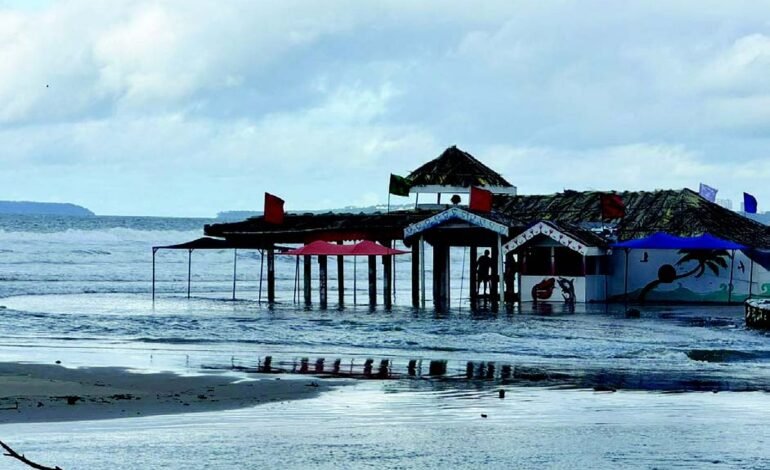

Majorda, one of South Goa’s most popular beach destinations, recorded another alarming incident on Wednesday night when rising sea water entered a local beach shack. According to sources, the water reached the kitchen area, causing disruption to the ongoing business activity and forcing operators to suspend operations temporarily. The incident has revived questions surrounding the suitability of certain coastal stretches for operating beach shacks during peak tourism season.
Repeated Incidents Prompt Concern
This is not an isolated episode. Over the past few years, shacks along Majorda’s vulnerable points have reported instances of water ingress during high tide or rough sea conditions. Stakeholders say the beach line has gradually shifted and portions once safe for tourism activity now experience periodic flooding.
A source close to the shack operator recalled that a written complaint was submitted to the Tourism Department last year, requesting reassessment of the allocated location. Operators argue that the current allotment is no longer sustainable as the area is frequently underwater and poses both operational and financial risks.
Demand for Administrative Intervention
Shack operators have urged authorities to evaluate ground conditions and consider alternate placements when safety concerns arise. They state that the permissions for shack installation should include periodic inspection by relevant departments during monsoon and post-monsoon months. When a location becomes non-operational due to sea erosion or flooding, many argue that relocation should be prioritized to protect livelihoods.
Tourism industry observers say that such incidents also impact visitor perception. Tourists often assume coastal infrastructure is fully safe and operational. Unexpected disruptions not only affect business but may also compromise customer confidence.
Coastal Erosion a Growing Challenge
Marine experts have repeatedly noted that parts of Goa’s coastline, particularly low-lying sandy stretches, continue to face erosion. Monsoons, changing wave patterns and rising sea levels have resulted in the coastline shifting closer toward active business zones. Majorda is among the beaches where such changes have been visibly recorded.
The repeated entry of seawater into commercial establishments highlights the need for long-term coastal management strategies. Safety audits, erosion control initiatives and periodic allocation reviews have been suggested as effective measures.
Industry Calls for Preventive Measures
Shack owners have requested timely intervention and clear policy guidelines for future tourism seasons. Operators say the goal is not confrontation but collaboration, ensuring that beach tourism remains safe and sustainable without risking business loss.
Many believe that the Tourism Department will take cognisance of the incident, especially because such conditions have been officially communicated previously. The expectation is that authorities will initiate preventive assessment and ensure that future operations are not compromised.
Local residents and stakeholders emphasize that Goa’s tourism reputation is built on safety, hospitality and well-maintained beaches. Any recurring operational challenges on the coast should be addressed through quick administrative response and scientific coastal management.
If appropriate action is taken, Majorda will continue to remain a favourite tourist hotspot without exposing businesses to avoidable risks.


